Pie: Free Events, Cool People
- 4.6
- Rating
- 10.00K
- Installs
- Free
- Price

 Analysis by App-foxy
I approached Pie as an events app rather than another place to scroll endlessly. Its basic promise is easy to understand: help me find places worth going to and people I might actually meet there. That makes it most interesting when I am deciding what to do next, not when I am looking for a complete social network to replace every other app on my phone.
In my experience, the value of Pie depends heavily on the moment I open it. With a reliable connection, it can turn a vague evening into a more concrete plan by putting events and social discovery in the same space. Without that connection, the experience naturally becomes less useful because the app’s purpose is tied to current information, changing plans, and interaction with other people. That network dependence is not a minor detail; it shapes how I would use it day to day.
The app is free, belongs to the Events category, and is made by pie. It is aimed at a Teen audience, so I see it as a better fit for older teenagers and adults who are comfortable exploring public activities and meeting new people. It is available for Android devices running version 7.0 or later, which keeps the technical entry point fairly broad for users with older phones.
You May Also Like

 Blood Strike: 2.5 Anniversary
Blood Strike’s Loadouts Turn Every Drop Into a Tactical Gamble
A close look at Blood Strike’s custom loadouts: how fast access to signature weapons reshapes its battle royale rhythm, rewards preparation, and narrows the gap between fights.

 Pandora - Music & Podcasts
Pandora’s Music Is Easy to Start, but Harder to Recover
Pandora’s strength is its low-effort path from a seed to a station. Its weak spot is how much confidence it asks you to place in connection, setup, and quiet recovery.

 8 Ball Pool
 Is Built on Rivalries, Rematches, and Routine
A close look at the rivalries, rematches, shared routines, and unanswered safety questions that turn a quick pool match into a persistent mobile community.

 Samsung Music
’s Quiet Strength Is Playing What You Already Own
Its reach comes less from spectacle than from dependable access to a personal library. That simplicity is both the app’s strongest retention engine and its ceiling.

 AccuWeather: Weather Radar
AccuWeather Review: A Quick, Clear Forecast for Everyday Decisions
For everyday plans, the best forecast is the one you can understand quickly. AccuWeather makes rain timing, radar, and local conditions easy to act on, with a few trade-offs.

 Hill Climb Racing
Why Hill Climb Racing Still Turns Crashes Into One More Run
A tiny car, a bumpy hill and one more upgrade: Hill Climb Racing keeps resurfacing because its simple chaos makes every near-miss feel personal.
More From Our News Desk
View All News


How Pie Works When You Are Actually Making Plans
I find the most useful way to approach this section is to think of Pie as the first step in making an outing, not the place where every detail has to live. I would start with a loose idea, use the app to turn it into a possible activity, and then decide what needs a separate confirmation before I leave. That distinction helps set up the practical question of how a promising discovery becomes a plan I can actually follow.
Discovery feels more useful than passive scrolling
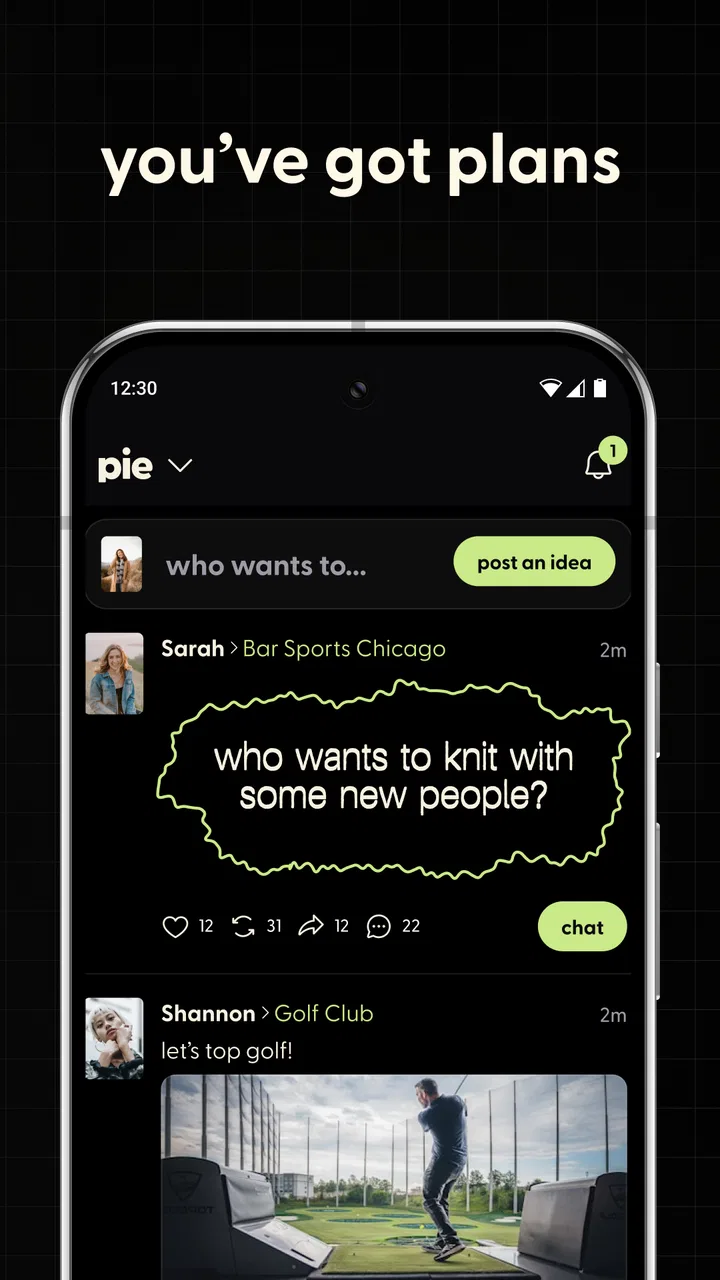
The strongest idea here is the combination of event discovery and social connection. Many event tools are good at listing concerts, gatherings, classes, or local activities but leave the social side to the user. Social platforms, on the other hand, may show what friends are doing without making it easy to find something new to attend. Pie sits between those habits, which gives it a clearer purpose than a generic feed.
I would open it when I know I want to go somewhere but have not decided where, or when my usual group is unavailable. Instead of starting with a message such as “what should we do tonight?”, I can begin with the activity itself. That small change matters because it gives a conversation a practical starting point. Asking someone to join a particular event is easier than trying to arrange an undefined meetup.
The app’s short store description is simply “Pie,” while its broader summary points toward places and people. I think that simplicity reflects the product better than a long list of promised tools. It is not trying to explain every possible use case; it presents itself as a way to connect plans with social discovery. Whether that works for me depends on how much relevant activity is available in my area and how willing I am to explore beyond familiar contacts.
Why the connection matters so much
Pie is most effective when I have a stable mobile connection and enough time to react to what I find. Event information can change, people can respond at different speeds, and plans often depend on current context. A weak connection can make browsing feel uncertain, especially if I am checking details while walking through a busy area or moving between locations.
This is different from using a notes app to write down a plan or a calendar to record a confirmed appointment. Those tools remain useful even when I am temporarily disconnected because the information is already mine. Pie is more dependent on live discovery and interaction. I would therefore treat it as a planning aid that works best before leaving home or while I still have dependable service, rather than as something I expect to rescue a plan in every low-signal situation.
A realistic example is a Friday afternoon when I have finished work and do not want to spend the evening alone. I might browse nearby possibilities, look for something that matches my mood, and then decide whether the social side feels comfortable enough to pursue. If I am using the app in a crowded station with an unstable signal, I would avoid making a last-second decision based only on what loads partially. I would first let the relevant information appear, then confirm the plan before traveling.
Using it in short mobile sessions
The app makes more sense to me in brief, purposeful sessions than in long browsing sessions. I would check it during a lunch break, after work, or while deciding between two options for the evening. That approach reduces the temptation to treat event discovery like an endless feed and keeps the focus on a decision: save the idea mentally, contact someone, or move on.
On a phone, context changes quickly. I may be at home with time to compare options, or outside with one hand free and a battery that is already low. The second situation requires more discipline. I would avoid opening Pie for the first time while already rushing to an event, because network delays and unfamiliar details create unnecessary friction. The better workflow is to explore earlier, choose a realistic option, and use the final mobile check only to confirm what I already intend to do.
That workflow also helps with social confidence. When I discover an event privately first, I can decide whether it genuinely suits me before involving someone else. I do not have to invite a friend to every possibility that appears. This makes the app more useful for people who enjoy spontaneous plans but still want a little control over the choice.
What happens when plans or loading go wrong
Any service built around current events and people has a natural point of failure: the information I need may not be available at the exact moment I need it. A slow connection, a delayed response, or a plan that changes outside the app can all reduce the usefulness of a discovery tool. I would not interpret that as a reason to abandon Pie, but it does mean I should not make it the only record of an important appointment.
My practical habit would be to confirm the essential details before setting off. Once I have chosen an event, I would keep the time and location in mind or record them in the calendar I already use. This is not because Pie is unsuitable for planning; it is because a social discovery app and a personal backup system serve different purposes. Keeping those roles separate makes recovery much easier if the connection drops or a conversation becomes hard to follow.
If a plan falls through, Pie can still be useful as a source of alternatives, but I would approach that situation with realistic expectations. The replacement needs to be reachable, appropriate for the time left, and comfortable to attend. A list of possibilities is not the same as a guaranteed solution. The app helps me widen the search; it does not remove the ordinary uncertainty of coordinating with people.
Small habits that make the experience better
One useful habit is to browse with a clear filter in mind, even if the app does not force me to do so. I might decide that I want something nearby, low-pressure, indoors, or suitable for going alone. This prevents attractive but impractical options from taking over my attention. The more specific my starting point, the less time I spend opening possibilities that I will never choose.
A second habit is to separate discovery from commitment. I can use Pie to notice an event, then pause before inviting someone or traveling. That short pause gives me time to check whether the timing works, whether the location is realistic, and whether the social setting matches what I want. It also avoids the awkwardness of sending an enthusiastic invitation and retracting it moments later.
A third is to use the app when I am open to meeting people, not when I am already determined to spend time only with a particular group. Pie’s social value comes from expanding the circle around an activity. If I only want a private plan with close friends, direct messaging or a shared calendar may be faster and clearer. Choosing the right tool for the intention is one of the main trade-offs here.
Data-conscious use on the move
Because Pie is designed around places, events, and people, I would be mindful about how often I refresh it while using mobile data. Repeatedly reopening discovery screens during a commute may not add much value, especially if I am not ready to make a decision. I prefer to browse deliberately, keep the useful details in mind, and close the app once I have a workable plan.
I would also avoid assuming that every piece of information remains current simply because it appears on screen. Event planning is time-sensitive, and social activity can change after I look at it. A final check before leaving is sensible, but constant checking is not a substitute for confirming a plan with the person involved. This is particularly important when the event matters enough that arriving at the wrong place or time would spoil the day.
For privacy and comfort, I would be selective about how quickly I move from discovering an activity to interacting with unfamiliar people. The app may make meeting others feel more approachable, but normal online judgment still applies. I would start with public settings, share only what is necessary, and choose arrangements that let me leave easily if the situation does not feel right. That is practical advice for any social event service, but it is especially relevant when discovery and meeting are placed close together.
Who will enjoy Pie most?
I think Pie is best for people who are curious about their local scene and want a bridge between “I should go out more” and an actual plan. It suits someone who is willing to try an activity without needing a large established group first. It may also appeal to newcomers who want a more activity-led way to meet people rather than starting with a purely conversational social platform.
It can be useful for a friend who often asks what is happening nearby but rarely searches far enough to find out. The app gives that person a reason to look with intent. It is also suitable for someone who has irregular free time and wants to discover options whenever a spare evening appears, provided they are comfortable with the experience depending on current connectivity and participation.
I would be more cautious about recommending it to someone who wants a fully private planning tool, a detailed personal calendar, or a guaranteed way to fill an event with friends. Those needs are better served by direct messaging, calendar apps, or established ticketing services. Pie is not the obvious choice when the plan already exists; its appeal is strongest while the plan is still forming.
How it compares with familiar alternatives
Compared with a standard calendar, Pie is more exploratory and less dependable as a permanent record. A calendar is excellent after the decision has been made, but it rarely helps me discover a new social possibility. I would use Pie first and a calendar afterward if the event becomes important enough to protect from memory lapses or connection problems.
Compared with a messaging app, Pie gives the conversation a destination. Messaging is better when I already know whom I want to contact and what we want to do. Pie is better when I need inspiration or want the activity itself to introduce a social possibility. The trade-off is that messaging feels more predictable, while discovery can involve more uncertainty.
Compared with broad social networks, Pie’s event focus is more practical. General feeds can show me what other people post, but they often mix plans with unrelated content. A focused events app can reduce that distraction. At the same time, a larger social network may offer a deeper existing contact list, so Pie’s usefulness will vary depending on how active the local community feels and whether the available choices match my interests.
What the current release suggests
The current version is 5.23.0, and the app has reached over ten thousand installs. Its average rating is 4.6 from more than a hundred ratings, with dozens of written reviews. Those figures suggest that early users generally respond well to the concept, although I would still treat them as a starting signal rather than proof that every neighborhood will offer the same experience.
Pie was released on November 20, 2024, so I see it as a relatively young product with room for its community and habits to develop. That can be exciting because a focused service may feel fresh rather than overloaded. It can also mean that the experience depends more on where I live and how many people nearby are actively participating. A strong concept needs local momentum to become a dependable part of my routine.
My connectivity verdict
After using Pie as a way to shape an outing, I would describe it as a promising free events app for people who want discovery and social possibility in the same place. Its best moments happen while I am connected, curious, and still flexible about what to do. It gives an otherwise vague plan a more concrete direction and can make meeting people feel connected to a shared activity rather than an abstract social goal.
The main limitation is also clear: I would not rely on it alone for critical details, last-second recovery, or plans that must work without dependable network access. I would browse early, confirm the essentials, keep a simple backup in my usual calendar or notes, and use ordinary caution when meeting unfamiliar people. Those habits do not weaken the app; they make its role clearer.
For me, the verdict is positive with conditions. If you want a private organizer, use a calendar. If you already know exactly which friends you are contacting, use messaging. But if you want to discover somewhere to go and connect that idea with the possibility of meeting people, Pie is worth trying. Its free price removes the main barrier to experimenting, and its Teen rating makes its intended audience clear. I would recommend it to a friend who wants more options than the usual routine, as long as they treat it as a connected discovery tool rather than a replacement for every planning and communication app they already use.
FAQs for Pie: Free Events, Cool People
01What is Pie: Free Events, Cool People?
Pie is a social networking app designed to help users discover free local events and connect with like-minded individuals. It curates a variety of activities, from concerts and art shows to networking meetups and community gatherings, allowing users to explore new experiences and make meaningful connections.
02How does Pie help me find events?
Pie utilizes location-based technology to recommend events happening near you. By providing personalized suggestions based on your interests and preferences, it ensures you never miss out on exciting opportunities to engage with your community. You can also filter results by category, date, and popularity.
03Is Pie free to use?
Yes, Pie is completely free to download and use. The app focuses on promoting free events, although some events listed may require a fee for entry. There are no subscription fees, and all core features are accessible without any cost, making it a budget-friendly option for event discovery.
04Can I connect with other users on Pie?
Absolutely! Pie encourages social interaction by allowing users to connect with others attending the same events. You can view profiles, send messages, and even create group chats, making it easy to coordinate plans and expand your social circle with people who share your interests.
05What devices is Pie available on?
Pie is available on both Android and iOS devices. You can download it from the Google Play Store for Android phones and the Apple App Store for iOS devices. It's optimized for both platforms, ensuring a smooth user experience regardless of your device choice.
Pros
- User-friendly interface with intuitive navigation.
- Large variety of events to suit all interests.
- Integrated chat feature for real-time communication.
- Personalized event recommendations enhance experience.
- Free to use
- with no hidden charges.
Cons
- Limited availability in smaller cities.
- Occasional crashes during peak times.
- Some events may have outdated information.
- Requires constant internet connection.
- Limited filtering options for event searches.

Pie: Free Events, Cool People
Gallery